
Table of Contents
- Introduction: Rewriting the Narrative of Dental Emergencies
- The Anatomy of a Crisis: Understanding Dental Pain
- The Golden Hour: A Precision Protocol for Dental Trauma
- The Neurology of Dental Anxiety: Why We Fear the Chair
- Modern Anxiety Management: The Human-Centric Clinic
- The Prevention Matrix: The Power of the Check-up & Clean
- Ferny Hills in 2026: Community, Growth, and Healthcare Access
- Decoding Your Symptoms: When to Call the Clinic
- Frequently Asked Questions (FAQs) on Dental Emergencies
- Conclusion: Securing Your Healthcare Partner Before the Crisis
1. Introduction: Rewriting the Narrative of Dental Emergencies
In the quiet hours of a Sunday evening or halfway through a critical presentation at work, a sudden, searing pain in the jaw can derail your entire life. Dental emergencies are visceral, deeply disorienting, and highly disruptive. Yet, the vast majority of patients are entirely unprepared for them. When a crisis strikes, panic replaces logic, leading to delayed treatment and poorer clinical outcomes.

Having an established, deeply trusted relationship with a dedicated family dentist ferny hills transforms a moment of panic into a manageable clinical event. You are no longer frantically searching Google for an open clinic; you are simply making a phone call to a team that already knows your medical history, your anxieties, and your baseline oral health. This comprehensive guide serves as a manual for understanding the biology of dental pain, managing sudden trauma, and utilizing preventative care alongside your preferred dentist samford to ensure that emergencies remain a rare exception rather than a terrifying rule.
2. The Anatomy of a Crisis: Understanding Dental Pain
To effectively manage a dental emergency, one must first understand what causes the pain. Unlike a scraped knee or a bruised muscle, dental pain originates within a tightly enclosed, unyielding space.
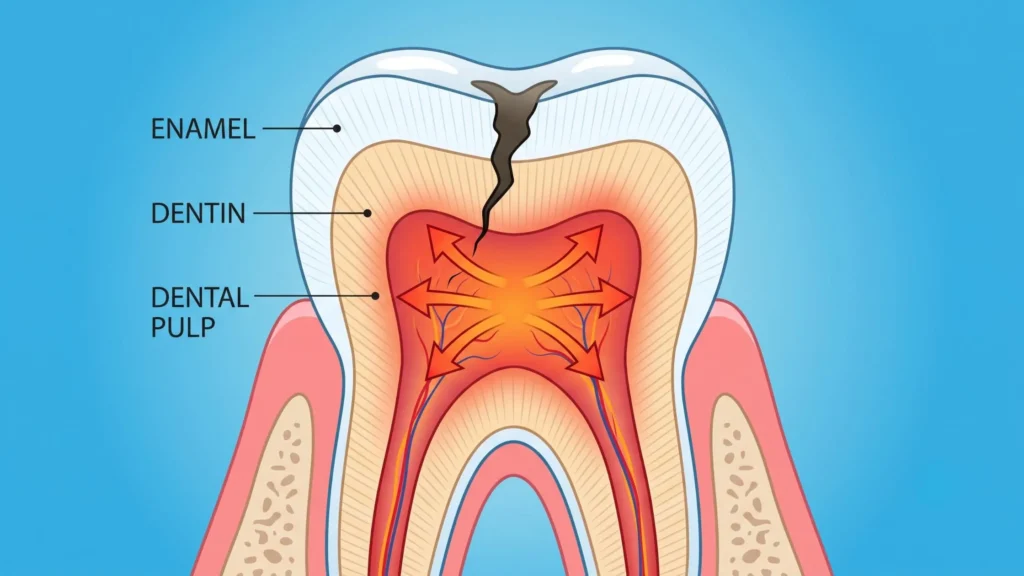
Deep inside every tooth lies the dental pulp—a delicate chamber containing the nerves, blood vessels, and connective tissue that keep the tooth alive. When bacteria from a deep cavity breach this chamber, or when physical trauma causes the tooth to crack, the pulp becomes inflamed. This condition is known as pulpitis.
Because the tooth is surrounded by hard enamel and dentin, the inflamed pulp has no room to swell. The pressure inside the tooth builds exponentially, compressing the nerve fibers and sending agonizing, throbbing pain signals directly to the brain via the trigeminal nerve. If left untreated, the pulp will undergo necrosis (death), and the bacteria will exit the root tip, flooding into the jawbone to form a highly destructive abscess. Understanding this biological mechanism highlights why “waiting it out” is never a viable strategy for severe dental pain. If you are experiencing this level of discomfort, you must access our dental treatments page to book an immediate assessment.
3. The Golden Hour: A Precision Protocol for Dental Trauma
For active families navigating weekend sports or simply the chaotic reality of daily life, physical trauma to the mouth is a constant risk. When a permanent tooth is completely knocked out (avulsed), a biological clock begins ticking. You have approximately 60 minutes—the “Golden Hour”—to successfully reimplant the tooth before the periodontal ligament cells on the root surface die off completely.
1.Locate the tooth and handle by the crown:Never touch the root.
Carefully pick up the tooth by the white chewing surface. Touching the yellowish root will crush the delicate ligament cells required for reattachment.
2.Assess and clean:Do not use tap water.
If the tooth is covered in dirt or debris, gently rinse it in cold milk or a sterile saline solution for no more than 10 seconds. Do not scrub it, and never rinse it under tap water, as the chlorine will kill the root cells.
3.Attempt immediate reimplantation:
If the patient is calm and conscious, gently guide the tooth back into its socket facing the correct way. Have them bite down softly on a clean handkerchief to hold it in place.
4.Secure transport medium:If reimplantation fails.
If you cannot get the tooth back into the socket, immediately place it in a small container of milk or have the patient hold it inside their cheek (if they are old enough not to swallow it).
5.Immediate clinical intervention:
Transport the patient to your emergency dentist ferny grove immediately. Time is the single most critical factor in saving the tooth.
4. The Neurology of Dental Anxiety: Why We Fear the Chair
It is estimated that up to 20% of the population avoids necessary dental care due to severe anxiety. This fear is not a character flaw; it is a complex neurological response. The mouth is one of the most intimately protected and highly innervated areas of the human body. Reclining in a chair and allowing someone to operate within this space triggers the brain’s amygdala—the center for fear and threat detection.
Historically, dentistry was a purely clinical, somewhat brutal affair that ignored this psychological reality. The sterile smells, the high-pitched whine of the drill, and the feeling of vulnerability all compound to create a “fight or flight” response, flooding the body with cortisol and adrenaline. Acknowledging this biological reality is the first step in dismantling the fear.
5. Modern Anxiety Management: The Human-Centric Clinic
In 2026, a premium family dentist samford does not just treat teeth; they treat the human attached to the teeth. The environment of a modern clinic is deliberately designed to down-regulate the nervous system.
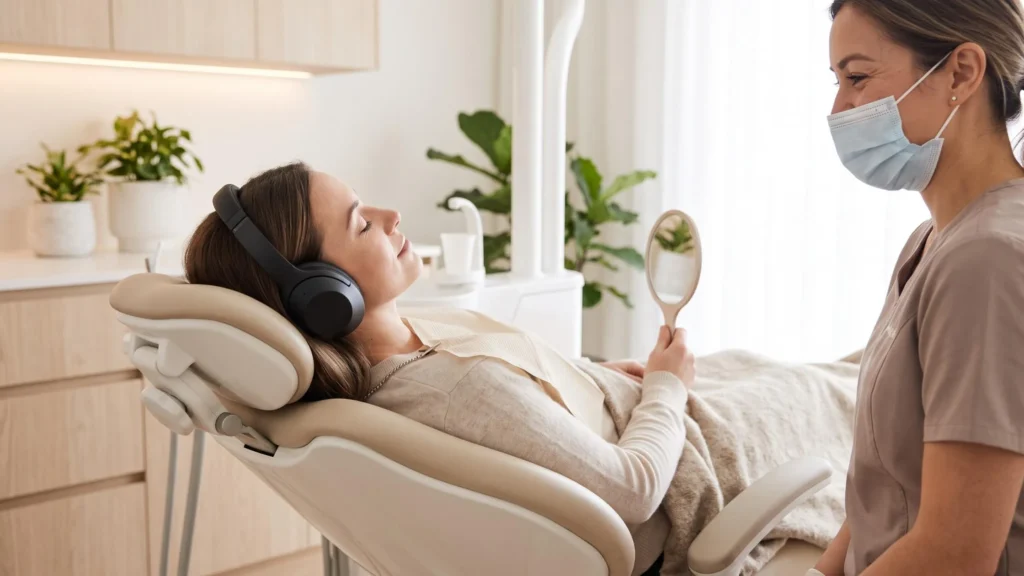
- Environmental Control: Waiting rooms resemble high-end lounges rather than clinical holding areas. Noise-canceling headphones playing bespoke ambient sounds or podcasts mask the acoustic triggers of the clinic.
- The Power of Agency: Anxiety thrives in a vacuum of control. We utilize “stop signals” (like raising a left hand) giving the patient total authority to pause the procedure at any second. This return of autonomy drastically reduces cortisol spikes.
- Advanced Anesthesia: The “sting” of an injection is entirely mitigated by the use of powerful, rapid-acting topical gels that numb the mucosa before any local anesthetic is administered. For highly anxious patients, various sedation protocols allow for completely relaxed, amnesic treatment sessions.
We encourage anyone suffering from dental fear to read about our compassionate, human-centric team to understand how we have engineered a space specifically designed to keep you calm and in control.
6. The Prevention Matrix: The Power of the Check-up & Clean
The ultimate weapon against both dental emergencies and dental anxiety is the bi-annual Check-up & Clean. This routine appointment is the cornerstone of a preventative healthcare matrix.
A dental emergency rarely occurs out of nowhere; it is almost always the violent culmination of a quiet, progressive problem. A micro-fracture in a molar might cause no pain for two years until you bite down on an almond, splitting the tooth in half. A slow-moving cavity might silently erode the dentin until it reaches the nerve on a Friday night.
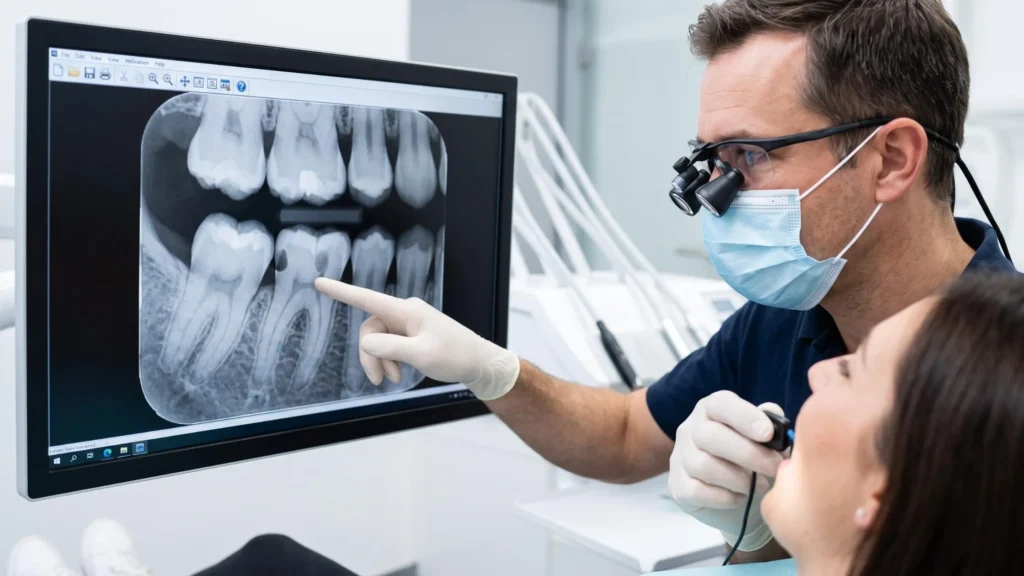
During a Check-up & Clean, high-definition intraoral cameras and low-dose digital radiographs allow us to map the micro-structures of your mouth. We intercept these silent threats while they are still minor, painless issues. Furthermore, the professional removal of hardened calculus ensures that your gums remain tightly adhered to the teeth, preventing the bone loss associated with periodontal disease.
7. Ferny Hills in 2026: Community, Growth, and Healthcare Access
Ferny Hills is currently standing at a demographic and infrastructural crossroads. With the City of Moreton Bay advancing its precinct planning, and the nearby Ferny Grove TOD bringing unprecedented connectivity and commercial density to the immediate border, the area is experiencing a surge of new families and established professionals.
This suburban evolution requires healthcare infrastructure that can keep pace. As property values rise and the community modernizes, residents expect a standard of clinical excellence that precludes the need to travel into the Brisbane CBD for complex care. A highly equipped local clinic acts as an anchor for the community, providing everything from pediatric interceptive orthodontics to complex adult emergency root canals under one roof.
8. Decoding Your Symptoms: When to Call the Clinic
Understanding how to “read” your dental pain can help you categorize the urgency of your situation:
| Symptom Profile | Underlying Cause | Urgency Level |
| Sharp pain only when eating sweets or drinking cold liquids. | Enamel wear, early decay, or a loose filling. | Urgent: Book an appointment within the week. |
| Dull, constant ache around the upper back teeth, exacerbated by walking. | Often sinus pressure masquerading as tooth pain. | Moderate: Monitor for 48 hours; book if it persists. |
| Severe, throbbing pain that wakes you up at night, unaffected by painkillers. | Irreversible pulpitis (nerve dying). | Emergency: Call immediately for an extraction or root canal. |
| Facial swelling under the eye or along the jawline, accompanied by fever. | Severe spreading abscess. | Critical Emergency: Requires immediate antibiotics and drainage. Proceed to an ER if a dentist is unreachable. |
9. Frequently Asked Questions (FAQs) on Dental Emergencies
Can I just go to the hospital emergency room for a toothache? While a hospital ER can provide temporary pain relief and prescribe antibiotics if there is dangerous facial swelling, they do not have the specialized equipment or personnel to perform dental procedures. They cannot perform a root canal or extract a complex tooth. You will ultimately be referred back to a dentist to solve the root cause.
What should I do if my temporary crown falls off? Do not panic, but do not ignore it. The underlying tooth is exposed and will likely be highly sensitive to temperature. Keep the temporary crown safe, avoid chewing on that side, and call the clinic to have it quickly re-cemented. Never use household superglue in your mouth.
Is bleeding after flossing an emergency? If your gums bleed slightly when you floss, it is not a medical emergency, but it is a giant red flag. It indicates active gingivitis (inflammation). The solution is not to stop flossing; the solution is to book a Check-up & Clean to remove the bacteria causing the inflammation.
10. Conclusion: Securing Your Healthcare Partner Before the Crisis
The worst time to search for a trusted healthcare provider is when you are in agonizing pain. Preventative care is not just about avoiding cavities; it is about establishing a clinical baseline and a relationship of trust.
By actively partnering with a premier family dentist ferny hills, you insulate yourself and your family against the stress, cost, and panic of unexpected dental trauma. Take control of your oral health today. We invite you to visit our primary hub to schedule your comprehensive baseline assessment, ensuring that when the unexpected happens, you are already in the safest possible hands.